
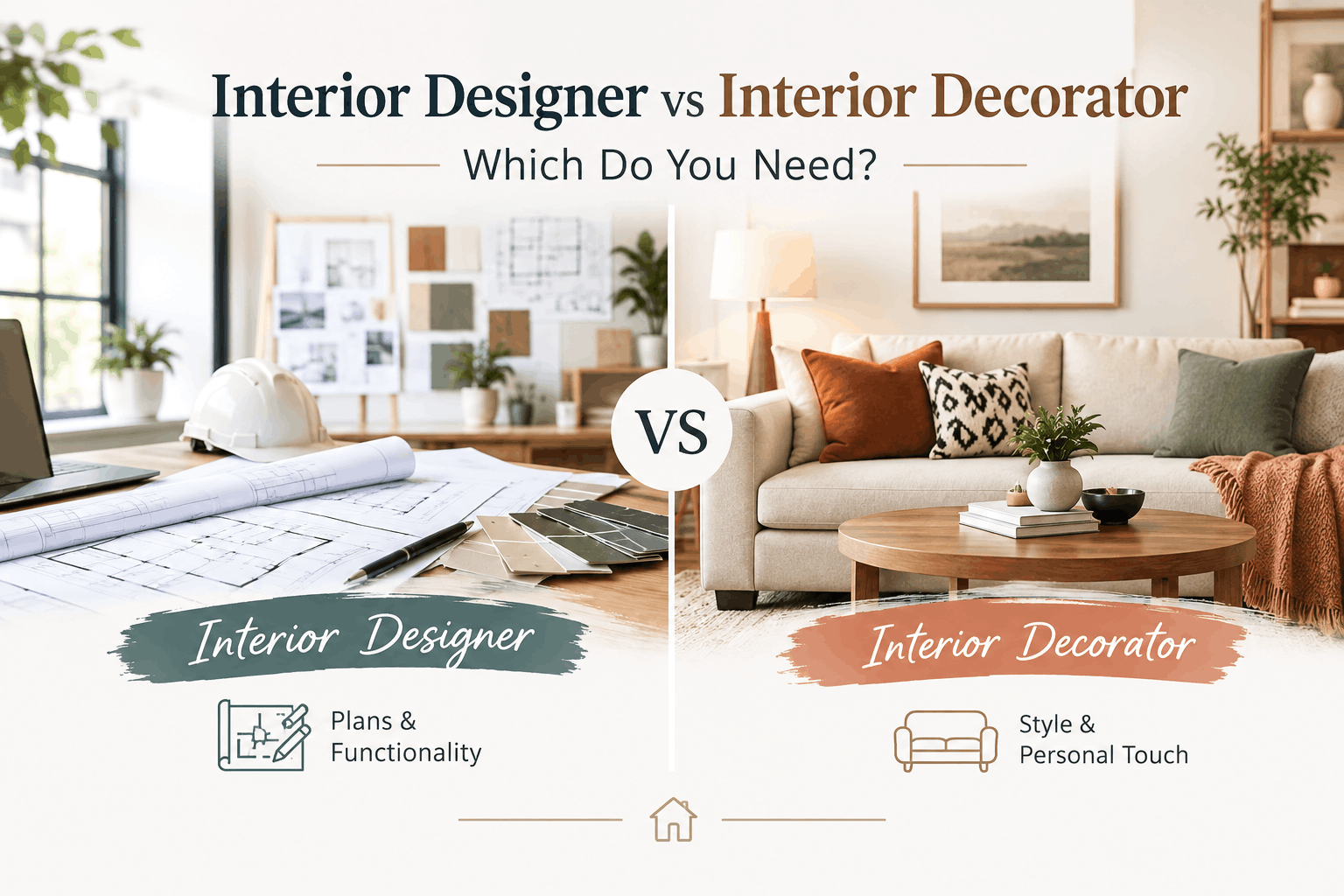
Most homeowners use these two titles interchangeably, and most contractors, real estate agents, and even some design professionals don’t correct them.
But the interior designer vs. interior decorator is not a debate about preference. The two roles involve different training, different legal scope, and different kinds of projects. Knowing the distinction before you hire someone can save you a redo, a permit headache, or a budget that spirals like the plot of Everything Everywhere All at Once.
This guide breaks down what each professional actually does, where their responsibilities overlap, where they split completely, and how to figure out which one fits your project.
What an Interior Designer Actually Does
An interior designer works with the architecture of a space, not just what sits inside it.
That includes floor plans, structural layout, lighting placement, HVAC coordination, and how a room functions for the people who live in it. A designer might move a wall, reconfigure a kitchen island, or rework a bathroom layout to solve a plumbing constraint.
Formal education backs this work. Most designers complete a degree program covering spatial planning, building codes, materials science, and CAD software, then sit for licensing exams depending on the state. This is why professional interior designer credentials carry legal weight in ways decorating credentials don’t. A licensed designer can sign off on construction documents and pull permits in jurisdictions that require it.
Interior design services typically start at the planning stage, before a single paint chip gets picked. The designer maps how a family moves through a home, where natural light falls throughout the day, and how furniture, storage, and traffic flow interact with the structure itself.
What an Interior Decorator Actually Does
A decorator steps in after the bones of a space are set. Their job is aesthetic: color palettes, furniture selection, textiles, artwork, and the finishing touches that make a room feel complete. No structural changes, no permits, no building code review.
Interior decorating services suit homeowners who already like the layout of their home but want it to look and feel different. A decorator might refresh a living room with new upholstery and a different color story, or help stage a home for sale. The work is faster, often less expensive, and doesn’t require the same regulatory oversight a designer’s work does.
Many decorators build genuine expertise in color theory, proportion, and furniture sourcing without ever touching architectural plans. That expertise is real. It’s just scoped differently than a designer’s training.
The Core Difference Between an Interior Designer and an Interior Decorator
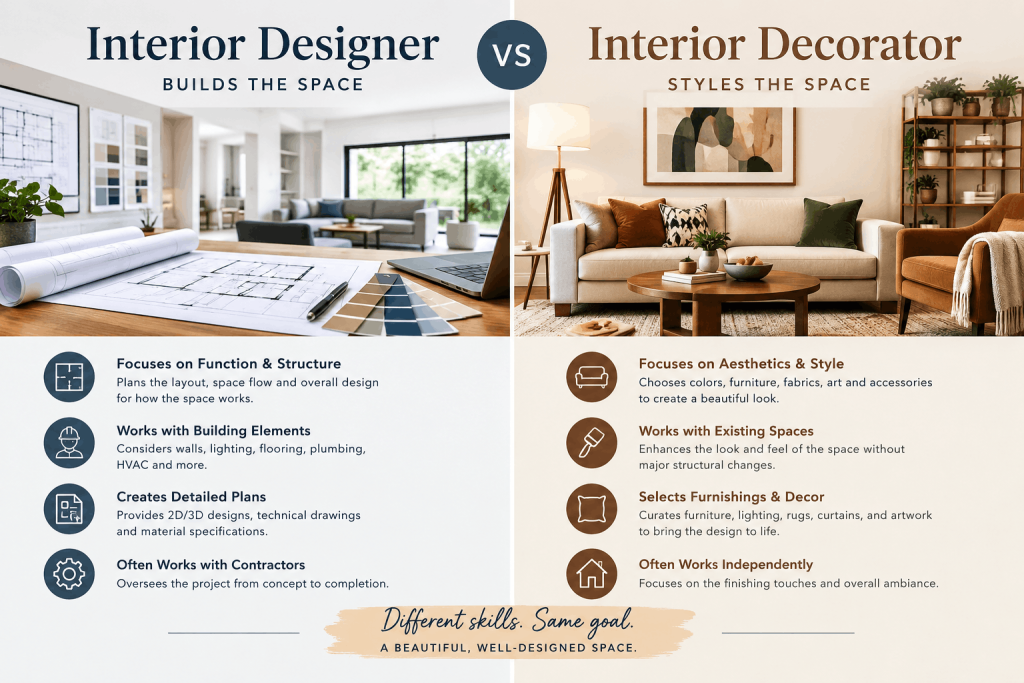
The difference between an interior designer and an interior decorator comes down to one line: structure versus surface. A designer can change how a room is built. A decorator changes how a room looks and feels within the structure that already exists.
Think of it this way: if your project involves a wall coming down, a kitchen getting reconfigured, or a room addition, you need a designer. If your project involves swapping out furniture, refreshing a color scheme, or styling a space that already works well functionally, a decorator is the right fit.
Licensing reinforces this split. Many states restrict who can call themselves an “interior designer” for exactly this reason: the title implies legal authority over construction-related decisions.
“Decorator” carries no such restriction, which is part of why the industry has so many decorators without formal certification and so few designers without one.
When to Hire an Interior Designer vs a Decorator
The decision of hiring an interior decorator vs. an interior designer usually comes down to what’s actually changing in your space.
Hire a designer when:
- You’re renovating, remodeling, or building new
- Walls, plumbing, or electrical layout need to move
- You want a cohesive plan from architecture through final styling
- Your project requires permits or code compliance
Hire a decorator when:
- Your layout works fine, and you just want a new look
- You need help choosing furniture, fabrics, or color palettes
- You’re preparing a home for sale and need staging
- Your timeline and budget are tighter than a full renovation would allow
Cost Comparison: Designer vs Decorator
Cost tracks scope. A decorator’s fee typically covers consultation time, sourcing, and styling, which keeps the overall project cost lower since there’s no construction, permitting, or architectural drafting involved. A designer’s fee reflects a broader scope of responsibility: planning, code compliance, contractor coordination, and often project management through to completion.
That said, hiring interior design services in Phoenix isn’t automatically the pricier option once you account for the full picture. A poorly planned renovation without professional oversight often costs more to fix than it would have cost to plan correctly from the start. The right comparison isn’t decorator-cheap versus designer-expensive. It’s matching the fee structure to what the project actually requires.
Full-Service Interior Design: What It Adds
Some firms offer full-service interior design, which folds both roles into a single relationship. Instead of hiring a designer for the renovation and a separate decorator for the final styling, a full-service interior designer manages the project from initial layout through the last piece of furniture placement.
This approach works well for homeowners who want one point of contact and a cohesive vision from structure to finish, rather than handing off a project midway and hoping the aesthetic matches the architecture. It also tends to reduce the back-and-forth that happens when two separate professionals aren’t communicating directly about the same space.
Benefit from a Local Perspective
If you’re weighing residential interior designer options for a home renovation, or you’re trying to decide whether your project needs a decorator’s touch or a designer’s full scope, it helps to work with a team that offers both under one roof.
That’s the approach C.C. Burling Design takes with every client: structural planning, space layout, and final styling handled by one team, so nothing gets lost between the architectural phase and the finishing touches.
Whether the project calls for home interior design from the ground up or a more focused decorating refresh, having both disciplines in-house means the vision stays consistent from the first sketch to the last detail.

